
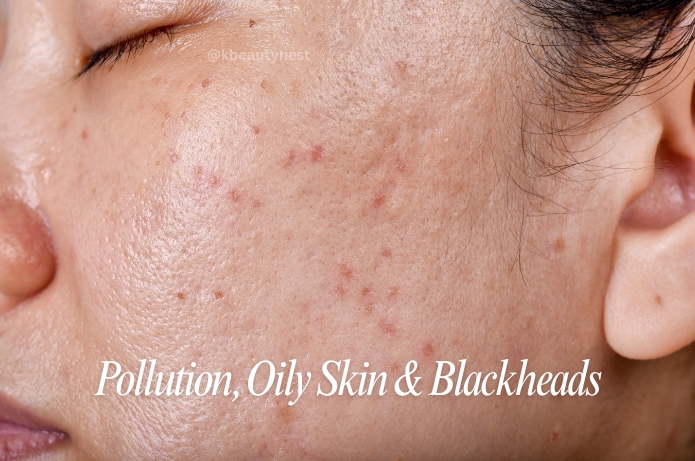
Is city life ruining your complexion? Discover how smog, humidity, and Indian weather combine to clog pores. We break down the science of blackheads and share the ultimate pollution oily skin treatment routine to get your glow back.
Table of Contents
- The “Sticky” Reality of Indian Cities
- The Science: How Pollution Actually Attacks Your Pores
- The Deadly Trio: Smog, Humidity, and Sebum
- Case Study: The “Metro Ride” Effect
- Your Anti-Pollution Skincare Routine
- Top Ingredients to Fight City Grime
- Diet and Lifestyle: Shielding from the Inside
- Frequently Asked Questions
The “Sticky” Reality of Indian Cities
Have you ever wiped your face with a tissue after a long day of commuting in Delhi or Mumbai, only to see the tissue turn a shade of grey? Yeah, that’s not just oil, that is the city sticking to you.
Living in a bustling city is exciting, but let’s be real: it’s a nightmare for our pores. If you have oily skin, you probably feel like a magnet for every speck of dust in the air. I remember waiting for an auto-rickshaw during Mumbai’s humid July, feeling my moisturizer melt off my face before I even reached the office. By noon, my T-zone wasn’t just shiny; it felt heavy and congested.
If this sounds like your daily struggle, you are not alone. Finding the right pollution oily skin treatment isn’t just about looking good; it’s about skin health. In this post, I’m going to break down exactly why this happens and, more importantly, how you can fix it without moving the mountains!
The Science: How Pollution Actually Attacks Your Pores
Okay, let’s put on our lab coats for a second—but I promise to keep it simple.
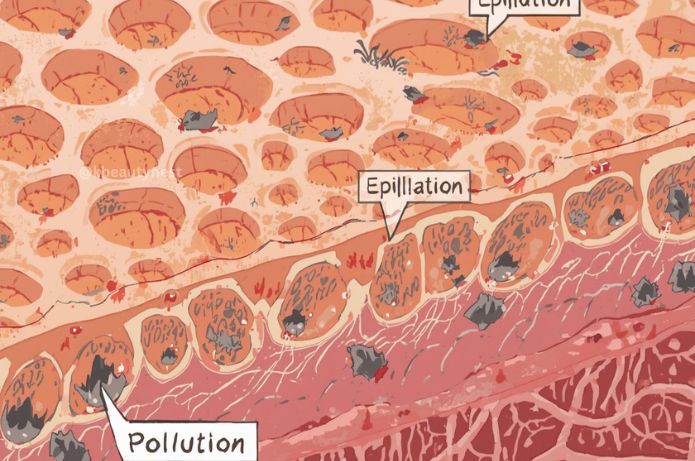
You might think, “Pollution is just dirt, right? I can wash it off.” Unfortunately, it’s a bit more sneaky than that. Environmental pollution consists of something called Particulate Matter (PM).
The Size Matters
Think of your pore like the opening of a small bottle.
- A grain of sand is huge; it just sits on top.
- PM 2.5 (fine pollution particles) are up to 20 times smaller than the diameter of a human pore.
Because they are so microscopic, they don’t just sit on your face; they infiltrate deep into your pores. Once they are in there, they trigger inflammation. Your skin panics and thinks, “Invaders! We need protection!” and responds by producing more oil.
Note: This cycle of inflammation and overproduction of oil is what eventually leads to acne and oxidation (which turns clogged pores into blackheads).
The Deadly Trio: Smog, Humidity, and Sebum
In India, we deal with a specific cocktail of chaos that makes skincare tricky. It’s not just the pollution; it’s the weather combined with the pollution.
Here is the breakdown of the “Deadly Trio”:
- Smog (Smoke + Fog): Contains free radicals that damage the skin barrier.
- Humidity: High humidity (hello, Chennai and Kolkata!) prevents sweat from evaporating, keeping your skin moist and sticky a perfect trap for pollutants.
- Sebum (Oil): Your natural oils act like glue. They catch the smog particles and hold them against your skin.
How Blackheads are Born
When that sticky mix of oil and pollution sits in your pore, it oxidizes. Think of a sliced apple turning brown when left out in the air. That’s oxidation. When the oil plug in your pore oxidizes due to pollution and air exposure, it turns black. Voila, a blackhead.
Pollution vs. Skin: A Comparison
| Feature | Clean Environment | Polluted Environment |
| Sebum Production | Balanced | Overactive (Defense mechanism) |
| Pore Appearance | Normal / Tight | Enlarged / Visible |
| Texture | Smooth | Rough / Bumpy |
| Complexion | Radiant | Dull / Greyish cast |
Case Study: The “Metro Ride” Effect
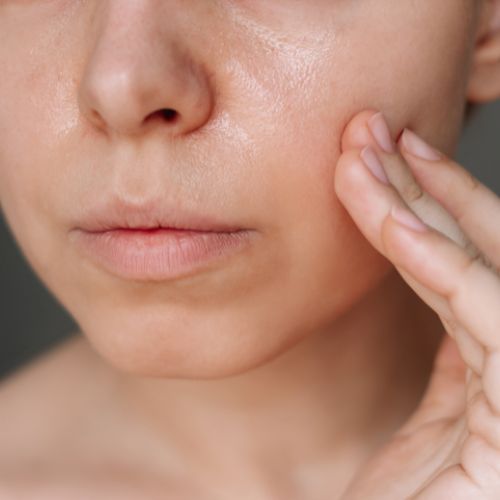
Let’s talk about a real-world scenario. Meet Ananya.
Ananya is a 24-year-old graphic designer living in Bangalore. She takes the Metro and then walks 10 minutes to her office. She noticed that despite washing her face every morning, by 4 PM, she had tiny bumps on her forehead and blackheads on her nose.
The Mistake: Ananya was using a harsh face wash to “strip” the oil, thinking that would stop the dirt from sticking.
The Result: Her skin barrier got damaged. The pollution delve deeper, and her skin produced even more oil to compensate for the harsh washing.
The Fix: She switched to a gentle double-cleansing routine and added an antioxidant serum. Within three weeks, the “city grey” dullness faded, and her blackheads reduced significantly.
This proves that effective pollution oily skin treatment is about balance, not aggressive scrubbing.
Your Anti-Pollution Skincare Routine
Ready to build your shield? Here is a step-by-step routine designed specifically for Indian weather and oily skin types.
Step 1: The Double Cleanse (Nighttime is Non-Negotiable)
If you take away one thing from this blog, let it be this: You must double cleanse at night.
- Why? A water-based face wash (your standard foaming cleanser) cannot dissolve oil-based pollution and sunscreen. You need oil to dissolve oil.
- How:
- Use a Cleansing Balm or Micellar Water. Massage it in to break down the sunscreen and city grime.
- Follow up with a gentle Salicylic Acid or Gel-based Cleanser to wash everything away.
Tip: Look for micellar waters that specifically mention “anti-pollution” or “PM 2.5 removal.”
Step 2: Exfoliate (But Gently)
To stop blackheads, you have to keep the pores clear.
- The Hero: BHA (Salicylic Acid). It is oil-soluble, meaning it can dive inside the oily pore and clean it out from the inside.
- Frequency: 2–3 times a week. Do not overdo it, or you will damage your barrier!
Step 3: The Antioxidant Shield (Morning)
Think of antioxidants as your skin’s bodyguards. They sacrifice themselves to fight the free radicals from pollution so your skin cells don’t have to.
- Best Pick: Vitamin C Serum.
- Alternative for Sensitive Skin: Niacinamide (Vitamin B3). It also helps control oil production!
Step 4: Moisturize (Yes, even oily skin)
Pollution dehydrates the skin. If you skip moisturizer, your skin produces more oil.
- Texture: Go for “Gel-based,” “Water-cream,” or “Oil-free” formulas.
- Key Ingredient: Hyaluronic Acid or Ceramides to repair the barrier.
Step 5: Sunscreen (The Final Layer)
Sunscreen creates a physical film on top of your skin. It doesn’t just block UV rays; it physically blocks some pollution particles from touching your living cells.
- Recommendation: A matte-finish, silicone-based sunscreen works great as a barrier for oily skin.
Top Ingredients to Fight City Grime
When you are shopping for your pollution oily skin treatment, look for these power players on the label.
1. Charcoal and Clay
- What they do: These act like magnets. A clay mask once a week can physically pull toxins and excess sebum out of the pores.
- Best for: Weekly deep cleaning (Sunday Self-care!).
2. Niacinamide
- What it does: It strengthens the skin barrier so pollutants can’t penetrate easily. It also regulates how much oil your face produces.
- Best for: Daily maintenance.
3. Matcha / Green Tea
- What it does: Packed with antioxidants to soothe the inflammation caused by smog.
- Best for: Calming red, irritated skin.
4. Fermented Ingredients (Galactomyces)
- What it does: Common in K-Beauty, these ingredients break down nutrients so they penetrate deeper, helping repair damage from environmental stress.
Diet and Lifestyle: Shielding from the Inside
You can’t just rely on creams. Your body needs help fighting the toxins you breathe in.
Eat Your Water
In Indian summers, we get dehydrated fast. Dehydrated skin = more oil.
- Eat water-rich foods like Cucumber, Watermelon, and Oranges.
- Drink at least 3 liters of water a day.
The Antioxidant Diet
To fight the oxidation (blackheads), eat foods that fight rust in your body.
- Berries (Strawberries, Blueberries)
- Leafy Greens (Spinach, Methi)
- Nuts (Walnuts, Almonds)

Cover Up
It sounds old school, but physical protection works best.
- Use a scarf or a dupatta to cover your face when traveling in open vehicles (autos/bikes).
- Wash your scarf regularly! If you re-use a dirty scarf, you are just pressing old pollution back onto your face.
Frequently Asked Questions
Q: Can pollution really cause acne?
A: Absolutely. It’s called “Chloracne” in severe cases, but generally, pollution clogs pores and increases inflammation, leading to breakouts.
Q: How often should I wash my face if I live in a polluted city?
A: Stick to twice a day (Morning and Night). Washing too often strips the barrier. If you feel greasy midday, use a blotting paper instead of washing again.
Q: Is sunscreen necessary if it’s smoggy and there is no sun?
A: Yes! UV rays penetrate smog. Plus, the sunscreen layer acts as a physical shield against the dust.
Conclusion
Living in the city doesn’t mean you have to accept dull, congested skin. By understanding how the “Deadly Trio” of smog, humidity, and sebum works, you can outsmart it.
Remember, the best pollution oily skin treatment is consistency. A good double cleanse at night acts like a “reset button” for your face, washing away the day’s stress and grime. Treat your skin gently, feed it antioxidants, and don’t forget that physical barrier (sunscreen is your BFF!).
Start small—maybe switch to a double cleansing method this week—and watch how your skin thanks you.
Did this explain why your skin has been acting up lately? Let me know in the comments below! If you have a friend who complains about “city skin,” share this post with them. 👇
Like | Dislike | Share | Comment
Reference:
- Environmental pollution and skin aging. Current problems in dermatology.
- Indian Journal of Dermatology – Impact of Pollution on Skin Health.
About the Author
KBN Editorial Team
We are a collective of Indian skincare writers, and research specialists who adapt Korean skincare to suit Indian skin tones, weather, and real-life budgets. At kbeautynest, we believe in educating, not overwhelming, our readers with skincare that makes sense in the Indian context.
Have a skin concern or routine question? Reach out—we’re always listening.
Disclaimer:
This blog post is intended for informational and educational purposes only. The skincare tips, routines, and product suggestions shared here are based on general knowledge and personal experience. Always consult a qualified dermatologist or skincare professional before making changes to your skincare routine, especially if you have sensitive skin, allergies, or ongoing skin conditions.