
Table of Contents
- Introduction
- What is PM2.5?
- How PM2.5 Damages the Skin (Explained Simply)
- The Difference in India vs. Korea
- How to Know PM2.5 is Affecting You
- A K-Beauty Routine That Protects Skin
- Dermatologist-Approved Anti-Pollution Ingredients
- Do Purifiers, Masks & Ventilation Actually Help?
- Quick Comparison
- Sources & References
- Final Engagement Prompt
Introduction
If you live in a city like Delhi, Gurgaon, Mumbai, Seoul, Incheon, or Busan, pollution is no longer something you simply “see” as smog in the air. You can feel it on your face. Many people across India and Korea now describe waking up with skin that looks dull, rough, or inflamed, even when they haven’t changed their skincare routine at all. The most worrying part is that dermatologists have been increasingly warning that PM2.5 skin damage is now one of the leading environmental causes of premature aging in Asia, as these particles are too small to see.
To put it simply, imagine dust particles are so tiny that they are thirty times smaller than the width of a human hair. Basically PM2.5 refers to particulate matter smaller than 2.5 micrometers. These particles are small enough to travel deep down into your skin, where they trigger inflammation, oxidative stress, pigmentation changes, and breakdown of collagen.
Cities in India and Korea experience some of the highest pollution exposure in the world. According to The Lancet Planetary Health, both regions exceed WHO safety recommendations for PM2.5 a large portion of the year. This post breaks down clearly, simply, and scientifically, how PM2.5 harms the skin, what happens differently in Indian vs. Korean climates, and how you can protect yourself with easy, effective K-beauty routines.
What Exactly is PM2.5 and Why Should You Care?
PM2.5 is a kind of airborne particulate pollution mostly caused by vehicle emissions, industrial activities, fossil-fuel power plants, rubbish or agricultural burning, and construction. Even simple chores, such as frying meals in a poorly ventilated kitchen, can increase indoor PM2.5 levels. Because the particles are so little, they behave differently than typical dust. They float longer in the air, adhere more strongly to skin, and are easily absorbed by pores and hair follicles.
A 2019 air pollution comparison published in The Lancet Planetary Health found that urban people in both India and Korea inhale PM2.5 levels that are many times greater than the WHO limit. This has an obvious impact on lung and cardiovascular health—but recent research shows that the skin, as the body’s largest exposed organ, suffers too. Unlike lungs, skin does not always have the defense enzymes required to neutralize environmental free radicals, making it more vulnerable.
How PM2.5 Damages Skin (Explained in Human Language)
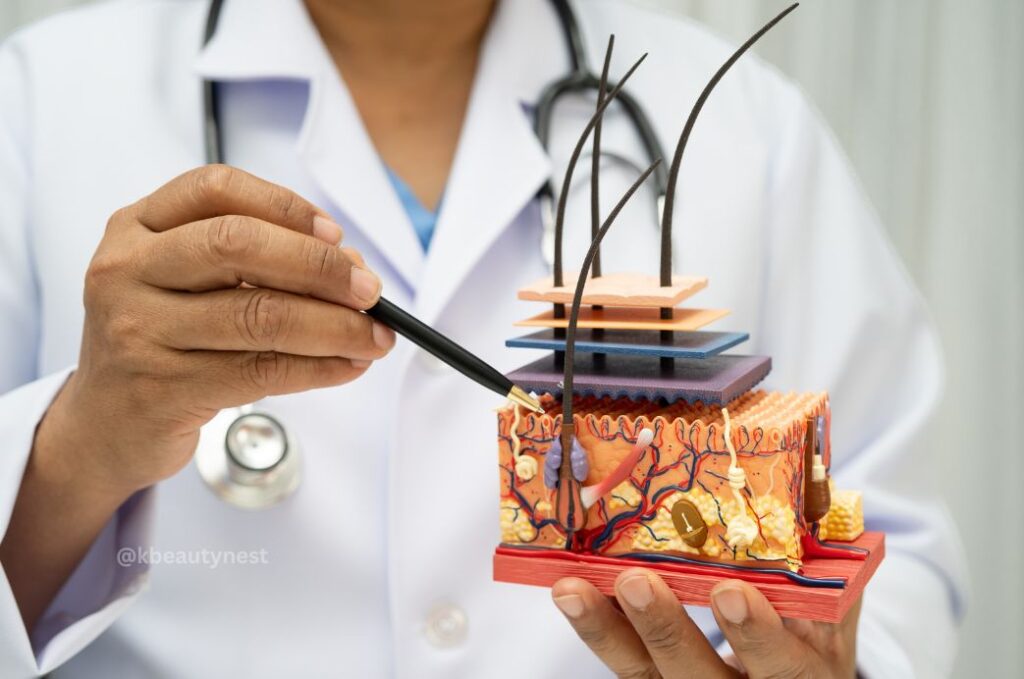
Dermatologists explain PM2.5 skin damage in four main steps. Imagine skin as a house with a strong outer wall. PM2.5 is like tiny, corrosive insects that sneak between the bricks and slowly weaken the structure.
1. It Triggers Inflammation
When PM2.5 lands on the skin, immune cells detect it as a foreign invader and respond by producing inflammatory molecules. This process is known as cytokine activation. Within hours, the skin may become sensitive, red, itchy, or hot. A clinical study published in Clinical Dermatology found that PM exposure can trigger significant inflammation within 24 hours, even in patients with otherwise healthy skin.
2. It Creates Oxidative Stress and Free Radicals
When PM2.5 penetrates the outer skin barrier, it begins to interact with oxygen molecules. This produces free radicals, which are unstable chemical particles that damage collagen, elastin, and the lipids that hold the skin together. Over time, this causes apparent indications of ageing, such as small wrinkles, lack of bounce, and dullness. Many dermatologists in Seoul now regard PM2.5 as a major cause of premature ageing among women in their twenties and thirties who live in polluted areas.
3. It Weakens the Skin Barrier
Ceramides and natural lipids form the skin barrier, which acts as a protective seal. PM2.5 erodes this seal in the same manner as acid rain erodes paint. When the barrier weakens, the skin loses moisture faster than it can replenish it. People frequently describe their skin as suddenly feeling tight, rough, and flaky, or “no matter how much I moisturize, nothing works.”
4. It Increases Pigmentation and Dark Spots
One of the most interesting findings in recent research is how strongly PM2.5 triggers pigmentation. A study published in the Journal of Investigative Dermatology discovered that women living in metropolitan high-pollution areas acquired considerably more dark spots and uneven tone than those living in low-pollution areas, even when UV exposure was equal. This suggests that pollution, not only the sun, is creating pigmentation, particularly on the cheeks and temples.
Why PM2.5 Affects Indian and Korean Skin Differently
One of the most fascinating discussions in dermatology today is how the same pollutant – PM2.5 creates different skin problems depending on climate. Doctors who treat patients in Mumbai or Delhi see a different pattern from dermatologists in Seoul or Incheon, even though PM2.5 levels may be equally high.
In India: Humidity + Pollution = Stickier Particles
The coastal and monsoon climates of cities such as Mumbai, Chennai, and Kolkata result in a humid environment. Sweat and oil mix with pollution particles, causing them to attach to the skin more strongly. During peak humidity, dermatologists in cities like Mumbai frequently see an increase in clogged pores, blackheads, and acne flare-ups. Many patients say that even cleansing, their skin still feels filthy or blocked. Humid heat almost “melts” urban pollution into the pores.
In Korea: Dry Winter Air Makes the Barrier Weak
Korea has harsh, dry winters and powerful air currents that transport industrial dust from China. Dermatologists in Seoul frequently see patients with barrier erosion, redness, and accelerated aging. The problem is not stickiness, but dehydration. Dry air already weakens the skin’s seal, and PM2.5 then penetrates even more easily. Korean dermatologists often prescribe ceramides, panthenol, squalane, and centella-based products during pollution peak season to strengthen the natural defenses.
Both patterns are correct, they are simply different expressions of the same environmental stressor.
➡️ This article continues in Part 2 — keep reading for skincare protection routines, dermatologist-approved ingredients, and real-world solutions.
About the Author
KBN Editorial Team
We are a collective of Indian skincare writers, and research specialists who adapt Korean skincare to suit Indian skin tones, weather, and real-life budgets. At kbeautynest, we believe in educating, not overwhelming, our readers with skincare that makes sense in the Indian context.
Have a skin concern or routine question? Reach out—we’re always listening.
Disclaimer:
This blog post is intended for informational and educational purposes only. The skincare tips, routines, and product suggestions shared here are based on general knowledge and personal experience. Always consult a qualified dermatologist or skincare professional before making changes to your skincare routine, especially if you have sensitive skin, allergies, or ongoing skin conditions.