
Table of Contents
- Introduction: The Smog vs. Your Skin
- The Science Stuff: What Pollution Actually Does
- The Hero Ingredients: Antioxidants Explained
- Top Foods to Fight the Haze
- Supplements: Do You Need Them?
- Hydration: The Secret Weapon
- Foods to Avoid During High AQI
- Comparison: Diet vs. Skincare Products
- Conclusion & Next Steps
Introduction: The Smog vs. Your Skin
You know that feeling when you step out in Delhi during November or December? That distinct smell of smoke in the air, the grey haze that turns the sun into a dull orange coin, and that gritty feeling on your face after a rickshaw ride? It’s not just in your lungs; it’s sticking to your skin, too.
Living in a city with high pollution levels is tough. I remember visiting Connaught Place last winter; even with a mask on, my skin felt tight, dull, and just tired by the evening. That’s because particulate matter (PM 2.5) is tiny about 30 times smaller than a human hair! These particles can delve deep into your pores, causing inflammation and breaking down your glow.
While we load up on serums and cleansers, we often forget the most powerful armor we have: our diet for skin pollution damage. What you eat can literally build a shield from the inside out. Let’s break down how to eat to beat the smog, just like I’d explain it to my younger sister who just moved to the city.
The Science Stuff: What Pollution Actually Does
Okay, let’s skip the boring textbook definitions and imagine a story.
Imagine your skin cells are like little sturdy bricks in a wall (that’s your skin barrier). Pollution particles are like little vandals throwing rocks at this wall. When these particles hit your skin, they create “Free Radicals.”
Think of Free Radicals as unstable, angry molecules that are missing a partner. To stabilize themselves, they steal energy from your healthy skin cells. This theft is called Oxidative Stress.
What does Oxidative Stress look like in the mirror?
- Premature Aging: Fine lines appearing faster than they should.
- Dullness: That “grey” look where your natural radiance disappears.
- Sensitivity: Red patches or sudden breakouts.
- Pigmentation: Dark spots that refuse to fade.
To stop these angry free radical vandals, you need “security guards.” These security guards are called Antioxidants. And guess where the best ones come from? Your lunch!
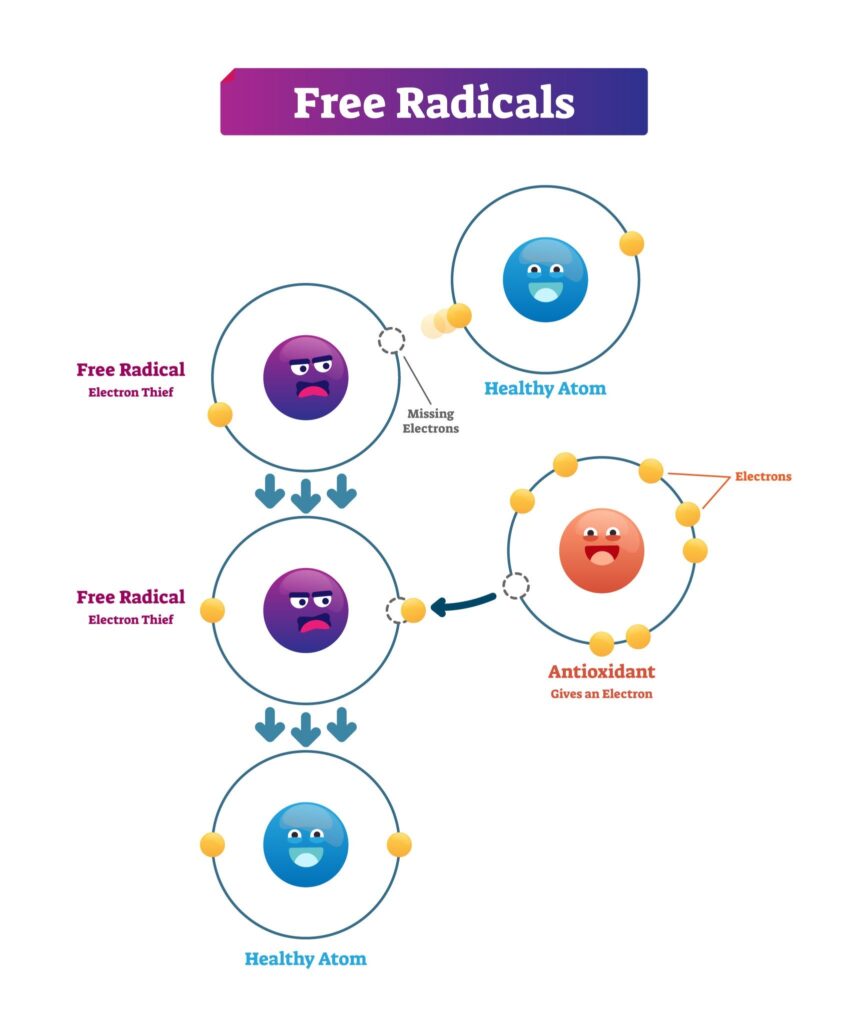
The Big Takeaway: Pollution creates chaos (free radicals). Your diet provides the peacekeepers (antioxidants) to stop the damage.
The Hero Ingredients: Antioxidants Explained
If we are building a diet for skin pollution damage, antioxidants are the VIPs. You can’t skip them.
When the Air Quality Index (AQI) hits 300+, your skin needs more than just moisturizer. It needs internal repair. Here are the three musketeers of skin defense:
1. Vitamin C: The Brightener
Vitamin C is famous for a reason. It acts like a shield, neutralizing the free radicals before they can damage your collagen (the stuff that keeps skin bouncy).
- Why you need it: It helps fade dark spots caused by pollution and keeps skin firm.
2. Vitamin E: The Moisturizer
If Vitamin C is the shield, Vitamin E is the healer. It sits in your cell membranes and protects them from drying out or getting damaged by smog.
- Why you need it: It keeps the skin barrier strong so toxins can’t get in easily.
3. Beta-Carotene (Vitamin A): The Repair Crew
This is what turns into Vitamin A in your body. It helps with cell turnover—basically throwing out the old, damaged cells and bringing in fresh, new ones.
Top Foods to Fight the Haze
Alright, let’s get practical. You don’t need fancy, imported berries to fix your skin. The Indian market is full of superfoods that are perfect for a diet for skin pollution damage.
Here is your grocery list for the next time you head to the sabzi mandi:
🥦 The Green Warriors
- Spinach (Palak): Loaded with Vitamin A and C. It helps repair skin cells damaged by toxins.
- Broccoli: Contains sulforaphane, which may help protect skin against UV rays and pollution.
🍊 The Citrus Squad
- Amla (Indian Gooseberry): The king of Vitamin C! One amla has more antioxidant power than a handful of oranges. Eat it raw, pickled, or as juice.
- Oranges & Lemons: Great for hydration and flushing out toxins.
🥜 Nuts & Seeds
- Walnuts: Rich in Omega-3 fatty acids. Think of Omega-3s as the oil that keeps your skin’s engine running smoothly. They reduce inflammation caused by smog.
- Sunflower Seeds: A tiny handful gives you a massive dose of Vitamin E.
🍅 The Red Defenders
- Tomatoes: They contain Lycopene, a powerful antioxidant that protects against environmental damage. Pro-tip: Cooked tomatoes (like in curries) release more lycopene than raw ones!
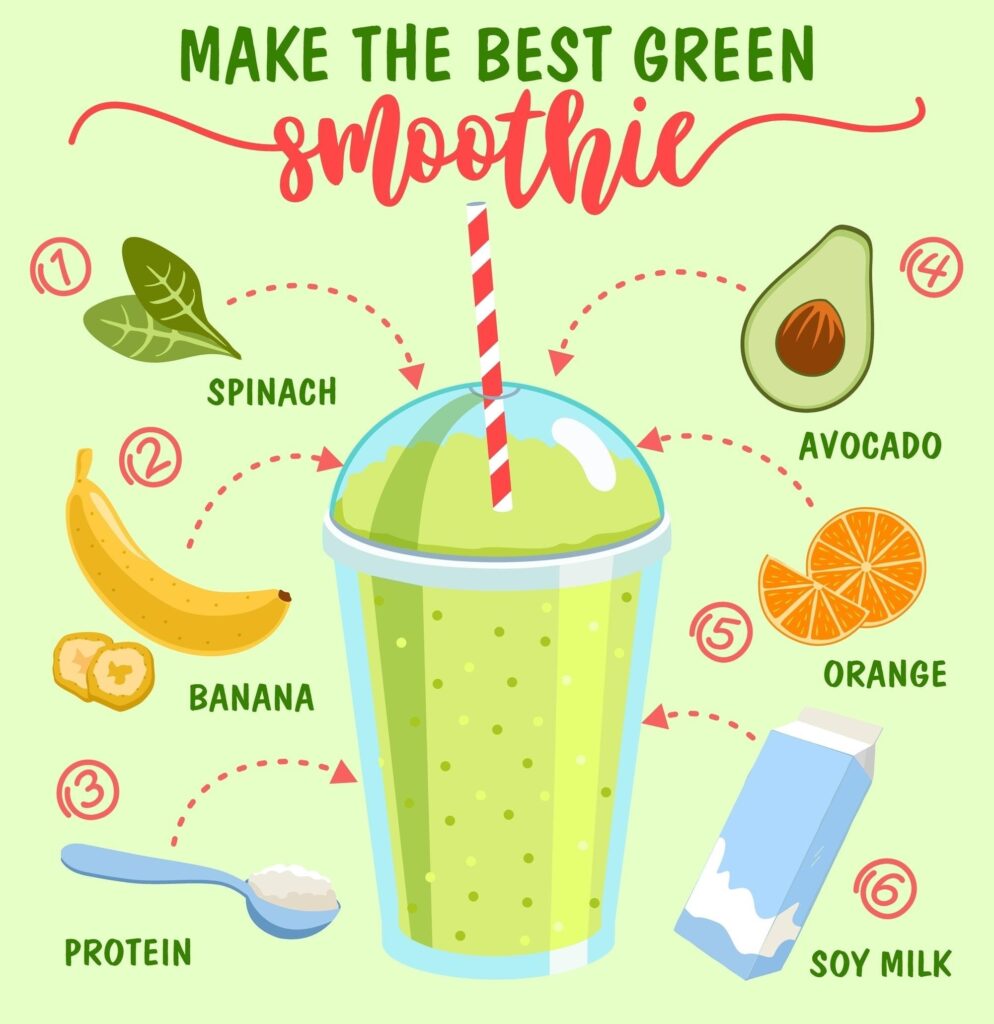
Quick Recipe Idea: The “Anti-Smog” Morning Smoothie
- 1 cup Spinach
- 1/2 Apple
- 1 tsp Flaxseeds
- 1/2 Lemon (juice)
- 1 cup Water or Coconut Water
- Blend and drink immediately for maximum potency!
Supplements: Do You Need Them?
Sometimes, food isn’t enough, especially if you are a picky eater or if the pollution is severe (like Delhi in November). However, supplements should supplement a good diet, not replace it.
Here are the most common ones referenced in skin health research (check out sources like Healthline or WebMD for deep dives):
1. Glutathione
Often called the “master antioxidant.” Our bodies make it, but pollution depletes it fast. Taking it as a supplement might help brighten skin and detoxify the liver, which indirectly helps the skin.
2. Collagen Peptides
Pollution breaks down collagen. Drinking collagen powder can help signal your body to repair that structure.
3. Astaxanthin
This is a potent antioxidant found in algae (it’s what makes flamingos pink!). Studies suggest it is significantly stronger than Vitamin C at fighting free radicals.
| Supplement | Best For | Caution |
| Vitamin C | Brightening & Immunity | Can cause acidity on an empty stomach. |
| Omega-3 | Moisture & Inflammation | Check with a doctor if on blood thinners. |
| Zinc | Healing breakouts | Don’t overdose; it can cause nausea. |
Export to Sheets
⚠️ Important: Always talk to a dermatologist or nutritionist before starting a new supplement routine.
Hydration: The Secret Weapon
This sounds basic, but hear me out. Pollution dehydrates your skin. When your skin is dehydrated, microscopic cracks appear in the barrier. These cracks are like open doors for PM 2.5 particles to walk right in.
Water is the cement that keeps the bricks together.
- The Goal: 2.5 to 3 liters a day.
- The Twist: Plain water can be boring. Infuse it! Add cucumber slices, mint leaves, or chia seeds.
- Green Tea: Swap your second cup of chai for Green Tea. It’s packed with catechins (EGCG), which are fantastic for reducing skin irritation and oiliness caused by smog.
Foods to Avoid During High AQI
When the air is toxic, your body is already under stress. Don’t add to the burden with “stressful” foods.
A diet for skin pollution damage isn’t just about what you eat; it’s about what you don’t eat.
- Sugar: Sugar causes “glycation.” It makes your collagen stiff and brittle. Pollution is already attacking your collagen; don’t help it destroy your skin!
- Deep-Fried Foods: Pakoras are tempting in winter, but they increase systemic inflammation. Inflamed bodies struggle to heal skin.
- Excess Dairy: For some, dairy can trigger acne, which is easily aggravated by the dirt and grime in the air.
Comparison: Diet vs. Skincare Products
You might be thinking, “Can’t I just buy that expensive Anti-Pollution Serum?”
Let’s compare the two approaches.
🧴 Skincare Products (Topical)
- Pros: Works immediately on the surface. Can wash away physical dirt.
- Cons: Can rub off. Only treats the top layer (epidermis). Can be very expensive.
- Verdict: Essential for cleaning and protecting the surface.
🥗 Diet (Internal)
- Pros: Fixes the problem at the cellular level. Results last longer. Improves overall health (hair, nails, energy). More affordable in the long run.
- Cons: Takes time to see results (4-6 weeks). Requires consistency.
- Verdict: Essential for repairing and building resilience.
The Winner? Both! But diet is the foundation. You can’t paint over a crumbling wall and expect it to look good.
See more about skincare routines in our post on Building a Skincare Routine for Beginners.
Conclusion & Next Steps
Living in a polluted city doesn’t mean you have to accept bad skin. By tweaking your grocery list and focusing on a diet for skin pollution damage, you are giving your body the weapons it needs to fight back.
Let’s Recap:
- Eat the Rainbow: Colorful fruits and veg = high antioxidants.
- Vitamin C is Queen: Amla, oranges, and lemons are your best friends.
- Hydrate: Water flushes out the toxins.
- Cut the Sugar: It weakens your skin’s defenses.
Start small. Maybe tomorrow morning, just add a handful of walnuts to your breakfast or swap your evening coffee for green tea. Your skin will thank you in a month!
What’s your go-to comfort food when the weather gets gloomy? (I secretly love hot soup!)
👇 Like, Share, or Drop a Comment below! Did you find this guide helpful? If you have a friend living in a smoggy city, share this with them, they might need it!
About the Author
KBN Editorial Team
We are a collective of Indian skincare writers, and research specialists who adapt Korean skincare to suit Indian skin tones, weather, and real-life budgets. At kbeautynest, we believe in educating, not overwhelming, our readers with skincare that makes sense in the Indian context.
Have a skin concern or routine question? Reach out—we’re always listening.
Disclaimer:
This blog post is intended for informational and educational purposes only and does not constitute medical advice. Consult a healthcare professional for specific dietary needs. The skincare tips, routines, and product suggestions shared here are based on general knowledge and personal experience. Always consult a qualified dermatologist or skincare professional before making changes to your skincare routine, especially if you have sensitive skin, allergies, or ongoing skin conditions.